If you are trying to find a home in Novato with room to grow, you already know the challenge: the obvious gems go fast, and the real opportunities are often hiding in plain sight. In a market where homes can move in a matter of weeks and multiple-offer situations are common, spotting value-add potential takes more than good taste. You need a practical way to separate cosmetic upside from expensive surprises. Let’s dive in.
Why value-add matters in Novato
Novato sits in a high-value Marin County market, with U.S. Census data showing a median owner-occupied home value of $1,032,500 for 2020 through 2024. Recent market reports put pricing even higher, with median sale and list prices landing roughly between $1.165 million and $1.232 million, and homes going pending in about 24 to 27 days.
That pace matters if you are buying with a renovation mindset. You often do not have the luxury of figuring out the upside after closing. The best approach is to identify likely improvements, estimate risk, and price that into your offer from the start.
What value-add usually looks like in Novato
Novato’s housing stock helps narrow the field. City housing materials describe a housing base where 61% of homes were built after 1970, 30% were built in the 1970s, and only 8% were built before 1950. Detached single-family homes also make up the largest share of the local housing stock.
In plain terms, that means many of the strongest opportunities are not teardown projects. They are often solid homes with dated finishes, older layouts, or underused space that could be modernized over time.
Look for solid-but-dated homes
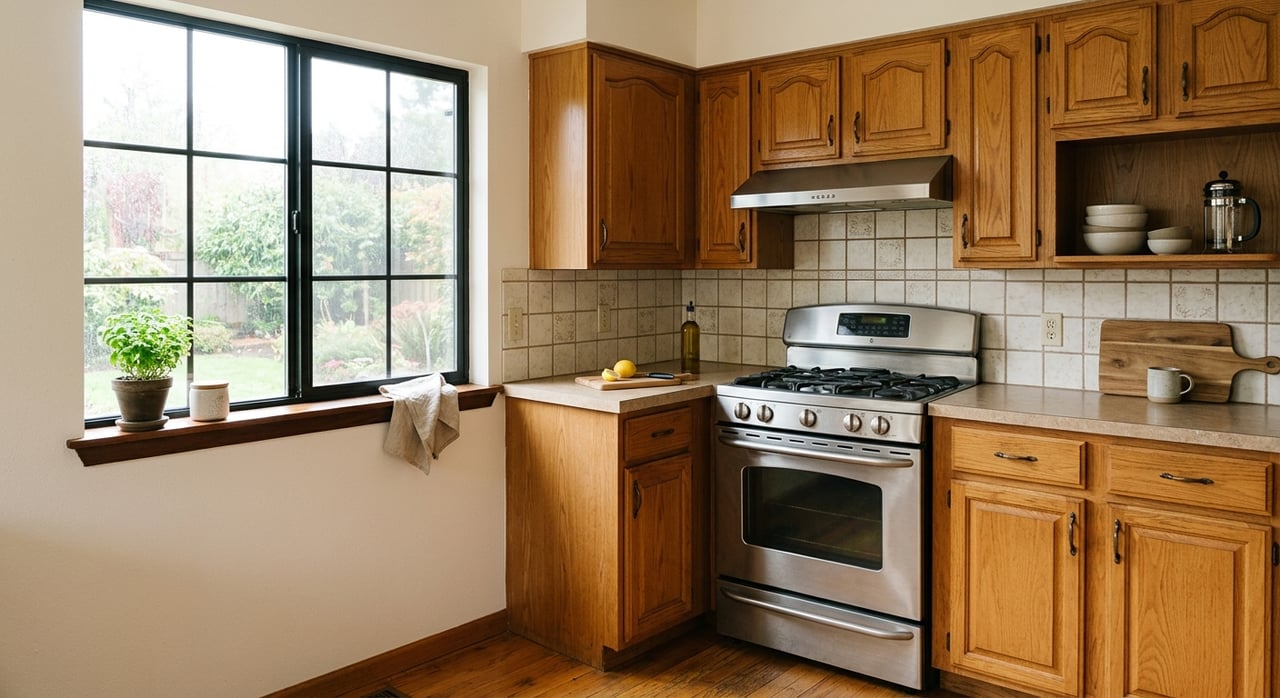
A home with an older kitchen, tired bathrooms, worn flooring, or outdated lighting may not photograph as well as a fully renovated listing. That can create an opening if the home has a functional footprint, decent natural light, and a location that supports long-term demand.
In Novato, this is often where value-add buyers should focus first. Cosmetic updates are usually simpler to plan than major structural work, and they can make a meaningful difference in day-to-day enjoyment and future resale appeal.
Focus on layout, not just finishes
The best upside is not always in paint colors or countertops. Sometimes it is in how the home lives. You may find value in a choppy floor plan, an underused formal room, or a kitchen that could work better with adjacent living space.
That said, Novato’s Building Division identifies kitchen remodels, bathroom remodels, and partition or non-bearing wall work as permit-related projects. The city also notes that additions and remodeling must first be approved by Planning, and visually significant changes or second-story additions may require design review.
The best value-add clues to watch for
When I help buyers think through upside, I like to start with a simple question: what can be improved without turning the project into a permit maze or budget trap?
Here are some of the most useful clues to watch for when touring Novato homes.
Cosmetic improvements with clear impact
Low-friction upgrades can offer some of the clearest upside, especially in a fast-moving market. These are the changes that improve first impression and livability without necessarily creating a long permit timeline.
Look for homes where the main needs are:
- Interior paint
- Flooring replacement
- Light fixtures and hardware
- Bathroom fixture updates
- Kitchen surface updates
- Front and backyard cleanup
- Basic landscaping improvements
These items are not glamorous on paper, but they often help you avoid the cost and complexity of larger construction while still building equity over time.
Kitchens and baths with remodel potential
Kitchens and bathrooms are common value-add targets because buyers tend to notice them first. If the room size works and the plumbing layout is mostly functional, a future remodel may be more straightforward than starting from scratch.
The key is to think beyond the wishlist. Ask whether the current layout supports a sensible update, whether walls may need to move, and whether the scope is likely to trigger more planning review than you expected.
Space that could become an ADU or JADU
Accessory dwelling potential can be one of the strongest long-term upside plays in Novato. The city allows ADUs on lots that allow single-family or multifamily residential use, and JADUs on lots developed with a single-family dwelling.
Novato also describes conversion ADUs as units created from existing space in a primary dwelling or accessory building. The city’s FAQ notes that a garage can be converted to living space if parking requirements are still met.
For some buyers, that opens up options for rental income, guest space, or multigenerational living. The important part is feasibility. A garage conversion idea is only valuable if the lot, parking, and approval path make sense.
Red flags that can change the budget
The best value-add opportunities are rarely the homes with zero issues. But there is a big difference between manageable work and hidden costs that can derail your plan.
In Novato, some of the biggest budget risks are tied to site conditions, hazards, and systems that are harder to judge from listing photos.
Flood and drainage concerns
Flood diligence matters in Novato. The city states that more than 5,000 acres are located in a Special Flood Hazard Area, and it identifies susceptible areas around the creek system and the Bahia area.
That has real budget implications. Homeowner’s insurance does not cover flood damage, and flood insurance is required in Special Flood Hazard Areas. If you are evaluating a property with creek proximity, low-lying grading, or visible drainage issues, that should be part of your renovation math from day one.
Wildfire readiness and defensible space
Exterior improvements are not just about curb appeal. Novato and Marin County both maintain resources related to hazards, including wildfire exposure and evacuation planning.
If a property has heavy vegetation, sloped land, or site access challenges, think carefully about defensible space, maintenance, and how exterior upgrades may affect safety and long-term costs.
Earthquake and structural risk
Some of the most important value-add work is not visible at first glance. California’s Homeowner’s Guide to Earthquake Safety recommends having a certified home inspector, licensed contractor, engineer, or architect evaluate earthquake risks and estimate strengthening costs when concerns exist.
That is useful framing for buyers because resilience work can be part of the upside story. Strengthening a home may improve safety and support long-term value, even if it is not as exciting as a kitchen remodel.
How to evaluate a Novato fixer realistically
A smart value-add purchase starts with discipline. In a competitive market, it is easy to fall in love with the vision and underestimate the friction between idea and execution.
Use this framework to pressure-test a home before you move forward.
1. Separate cosmetic work from structural work
Start by dividing the project into two buckets. Cosmetic work includes items like paint, flooring, fixtures, and landscape cleanup. Structural or systems work includes foundation concerns, drainage correction, electrical, plumbing, seismic strengthening, and major reconfiguration.
If the home needs both, your budget and timeline can shift quickly. That does not mean you should walk away, but it does mean the upside has to justify the complexity.
2. Check the permit path early
In Novato, design ideas are only useful if they align with the city’s planning and building process. The city states that additions and remodeling must first be approved by Planning, while some visually significant changes and second-story additions require design review.
This is one of the most overlooked parts of value-add analysis. A simple idea on paper can become expensive if approvals are more involved than expected.
3. Read disclosures with a renovation lens
The California Department of Real Estate advises buyers to inspect electrical, plumbing, and structural integrity, include home inspection contingencies, and consider pest-control inspections when making an offer.
That guidance is especially important when you are buying for upside. You are not just asking, “Do I like this house?” You are asking, “What will it take to make this house work the way I want?”
4. Factor in the full ownership cost
Your budget is more than the purchase price and contractor bid. The California Department of Real Estate also notes that special taxes, assessments, and HOA dues can materially affect monthly costs.
For buyers using a value-add strategy, that means you need to underwrite the whole picture. Insurance, hazard-related costs, permits, inspections, and future improvements all belong in the decision.
Why long-term equity matters more than a quick flip
Novato’s pricing and pace can make value-add homes feel exciting, but the strongest strategy is usually long-term. The California Department of Real Estate notes that buyers typically need 5% to 20% down plus 3% to 7% in closing costs, and it also points out that if you do not expect to stay for several years, much of the equity built early on may be lost to selling costs.
That is why I encourage buyers to think in phases. If the house works today and has a clear path for smart improvements over time, it may be a stronger purchase than a home that needs everything at once.
Novato’s housing planning is also evolving. The city adopted its revised Housing Element in May 2024 and reports implementation measures that include ADU streamlining and permit-process improvements. That makes it even more important to evaluate a home not just as it exists today, but in the context of current rules and future neighborhood change.
A practical value-add mindset
In Novato, value-add potential usually comes down to three things: buying the right house, understanding the city process, and avoiding surprises that erase your upside. The goal is not to find a “perfect fixer.” The goal is to find a property where the improvements are realistic, the costs are manageable, and the long-term equity story makes sense.
That is where local strategy matters. If you can identify dated-but-solid homes, assess hazard and site conditions early, and move quickly with a clear plan, you put yourself in a much better position to buy confidently.
If you are weighing a Novato home with renovation potential, I can help you think through the real opportunity, the likely friction points, and whether the numbers support the vision. When you are ready, connect with Julie Upton.
FAQs
What does value-add potential mean in Novato real estate?
- In Novato, value-add potential usually means a home has room for improvement through cosmetic updates, layout changes, ADU possibilities, or resilience upgrades that may support long-term equity.
What types of Novato homes usually offer the best upside?
- Many of the strongest opportunities are solid single-family homes built after 1970 that feel dated but have usable layouts, decent lot utility, and clear room for modernization.
What should buyers check before renovating a Novato home?
- Buyers should review disclosures, inspect structural and major systems, evaluate flood and wildfire context, and confirm the likely planning and permit path before committing to a renovation budget.
Can a garage conversion add value to a Novato property?
- It can, if the property qualifies and parking requirements can still be met. Novato states that a garage may be converted to living space if parking requirements are satisfied.
Why is flood risk important when buying a Novato fixer?
- Flood risk can affect insurance needs, renovation cost, and long-term planning. The city states that flood insurance is required in Special Flood Hazard Areas and that standard homeowner’s insurance does not cover flood damage.
Is a value-add purchase in Novato better for long-term owners?
- Often, yes. Given upfront buying costs and early selling costs, the value-add story in Novato is usually stronger for buyers planning to hold the property for several years rather than treat it as a quick flip.