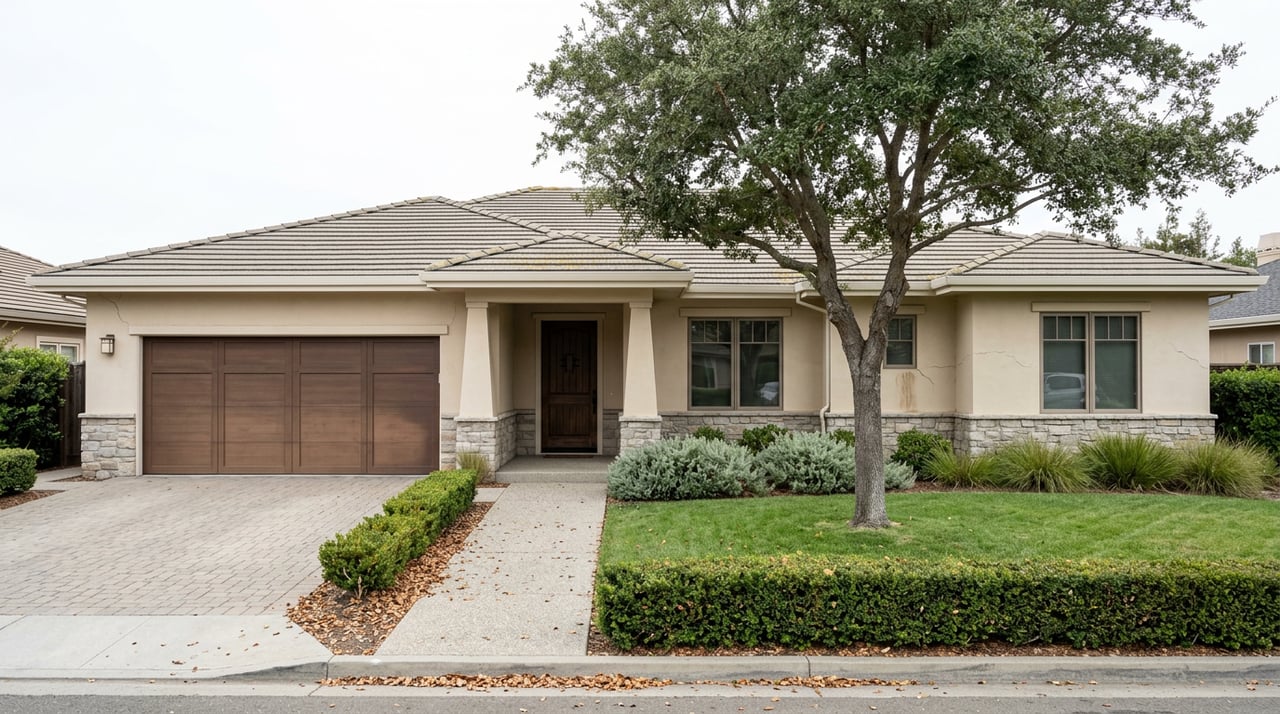
Two homes list for $1,300,000 in Novato this month. One sits on a quiet street north of downtown. The other sits in Pointe Marin, a master-planned neighborhood built on former Air Force land in the south of town. Same price. Same county. Same school district boundary lines, roughly speaking.
They do not cost the same amount to own. One of them carries a second tax bill that shows up nowhere on the listing sheet, and depending on which pocket of Novato you're looking at, that second bill can run into the thousands every year, for decades. If you're comparing Novato to another Marin town using the headline median price, you're missing the part of the story that actually determines your monthly payment.
Three ZIP Codes, Three Markets
Novato is Marin County's largest city by land area and its most affordable citywide, which is exactly why buyers priced out of Mill Valley or San Rafael start here. But "Novato" isn't one market. It's three, split by ZIP code, and they don't move together.
North and central Novato (94945 and 94947) cover downtown, older established streets, and the bulk of the city's housing stock built before the 1990s. South Novato (94949) is different terrain entirely: Hamilton Field, Pointe Marin, Bel Marin Keys, Marin Country Club Estates, and Loma Verde all sit inside this single ZIP code, and nearly all of that housing was built after 1995 on land that used to be a military airfield.
In spring 2026 (the March through May window), citywide sales data showed a familiar seller's-market pattern: fewer homes changed hands, days on market ticked up slightly, and prices still climbed. But the three ZIP codes told three different stories underneath that headline. 94945 made up nearly 39 percent of all single-family sales that spring, with a median price around $1,242,500. Meanwhile 94949, the newer south end of the city, posted the fastest sales in Novato at just 24 days on market, and its per-square-foot price rose close to 5 percent year over year.
The 13 Percent Drop That Wasn't a Drop
Here's where it gets interesting for anyone reading Novato numbers as a single trend line. That same spring, 94949's median sale price fell by roughly $235,000, a drop of about 13 percent, landing near $1,550,000. On the surface, that looks like softening in Novato's priciest ZIP.
It wasn't softening. Price per square foot in 94949 rose during the same period, and homes there sold faster than anywhere else in the city. The median dropped because fewer ultra-high-end trophy homes changed hands that quarter, not because buyers were paying less for comparable square footage. A handful of large, expensive sales missing from the mix can swing a small neighborhood's median by six figures without a single home actually losing value.
If you're pricing a home, or sizing up a purchase, against a ZIP-code median alone, you can talk yourself into a conclusion the underlying homes don't support.
This is the first reason a single Novato number misleads you. The second reason lives inside the price tag itself.
What "Newer Construction" Actually Costs
Older Marin towns built their roads, sewers, and parks decades before Proposition 13 capped how fast property tax revenue could grow. Newer developments built after 1978, including most of south Novato, didn't have that luxury. California's answer was the Mello-Roos Community Facilities District, a mechanism that lets a city finance a new neighborhood's infrastructure by issuing bonds and then repaying them through a special tax charged only to homes inside that district's boundary.
Hamilton Field sits on the site of a former Air Force base dedicated in 1935 and decommissioned decades later, and Shea Homes built much of the neighborhood's Breakers section on ground that once held base officers' housing. Building an entire community from scratch, levees, storm drains, roads, and parks included, is exactly the kind of project Mello-Roos financing was designed for. The City of Novato formed the Hamilton Community Facilities District in 1995 to cover those costs, and a separate district for Pointe Marin followed in 2002 when that neighborhood was built out.
Here's how the two districts compare:
| District | Formed | Funds | Annual tax range | Bond status |
|---|---|---|---|---|
| Hamilton CFD | 1995 | Levee, roads, storm drainage, sewer, water, parks | Roughly $1,600–$2,800/year, varies by home size | Facilities portion sunsetting in the 2025–2026 cycle for many parcels; services tax continues indefinitely |
| Pointe Marin CFD | 2002 | Storm drainage, street improvements, landscaping | Roughly $2,100–$3,600/year across 11 size-based tax brackets | Bond scheduled to mature in September 2032; services tax continues after |
Both districts split the charge into two pieces. The facilities tax pays down the original construction bond and eventually expires. The services tax funds ongoing maintenance, mainly the levee and landscaping, and by design it never ends. According to the City of Novato's own CFD page, Hamilton's bond debt was slated for payoff in 2025, while Pointe Marin's runs on a longer clock tied to its later formation date.
The Line Item That's Actually Moving This Year
This isn't ancient history. Novato's own schedule puts Hamilton's facilities-tax payoff squarely in the 2025 to 2026 cycle, which means the total CFD bill on many Hamilton parcels is shrinking right now, not in some hypothetical future year. A buyer closing on a Hamilton home this fall may inherit a meaningfully smaller special tax than someone who bought the identical floor plan two years ago.
Pointe Marin isn't on the same clock. Its bond doesn't mature until September 2032, so buyers there should plan on paying the full facilities-plus-services charge for years yet. Two neighborhoods, both inside the same ZIP code, both built on former base land, carrying different tax trajectories depending on when their district was formed.
Comparing Two $1.3 Million Novato Homes
Go back to the two listings from the opening. If the north Novato home sits outside any CFD boundary, which is typical for the city's older streets, its owner pays standard Marin property tax and nothing more. If the Pointe Marin home carries a CFD tax near the middle of its range, say $2,800 a year, that's roughly $233 a month added to the housing payment before a single dollar of mortgage interest or insurance is counted. Over a 30-year hold, and factoring in the modest annual increases most CFDs are permitted, that gap adds up to real money, money that never shows up when you're scanning list prices side by side.
None of this makes a CFD neighborhood a worse buy. Pointe Marin and Hamilton Field offer newer construction, community amenities, and access to open space that older Novato streets can't match, and plenty of buyers decide the tradeoff is worth it. The point is that the tradeoff needs to be priced in, not discovered at your first property tax bill.
Before comparing a Novato listing to one anywhere else in Marin, or to another listing across town, it's worth confirming a short list of facts for the specific address:
- Is the property inside a Community Facilities District, and which one?
- What is the current annual special tax amount, and is it the facilities-plus-services combination or services only?
- When is the bond scheduled to mature, and does that date apply to this parcel?
- Does the Natural Hazard Disclosure report list the sunset date, and does it match what the city's CFD reports show?
- Is there also an HOA fee layered on top of the CFD tax, since the two are separate charges that both show up in your monthly cost?
A few minutes with the city's tax reports or a request during your due diligence period settles all of this before you're in escrow, not after.
A Few Questions Worth Answering Directly
Does every home in 94949 have a Mello-Roos tax? No. The CFDs apply only within the boundaries the city drew for Hamilton Field and Pointe Marin. Bel Marin Keys, Marin Country Club Estates, and Loma Verde sit in the same ZIP code but may fall outside those specific district lines, so the only reliable answer is to check the parcel.
Will the tax ever disappear completely? The facilities portion expires once the bond is repaid, which is happening now for many Hamilton parcels and won't happen for Pointe Marin until 2032. The smaller services portion, covering levee and landscape maintenance, is structured to continue permanently in both districts.
Where do I find the exact number for a specific address? The city's Community Facilities District page publishes annual tax reports for each district, and your county property tax bill will list the CFD as a separate line item once you own the home. Ask for both during any purchase in south Novato.
A citywide median tells you where Novato has been. It won't tell you what a specific address will actually cost you to hold, and in a city built out of three very different ZIP codes on two very different tax schedules, that difference is the whole conversation. If you're weighing a Novato home against something in Mill Valley, Larkspur, or anywhere else in Marin, run the full monthly number, not just the sale price, before you decide what "affordable" really means.
If you want a second set of eyes on what a specific Novato address will actually cost to carry, or how it stacks up against options elsewhere in Marin, Julie Upton is happy to walk through the numbers with you. Let's Connect.